
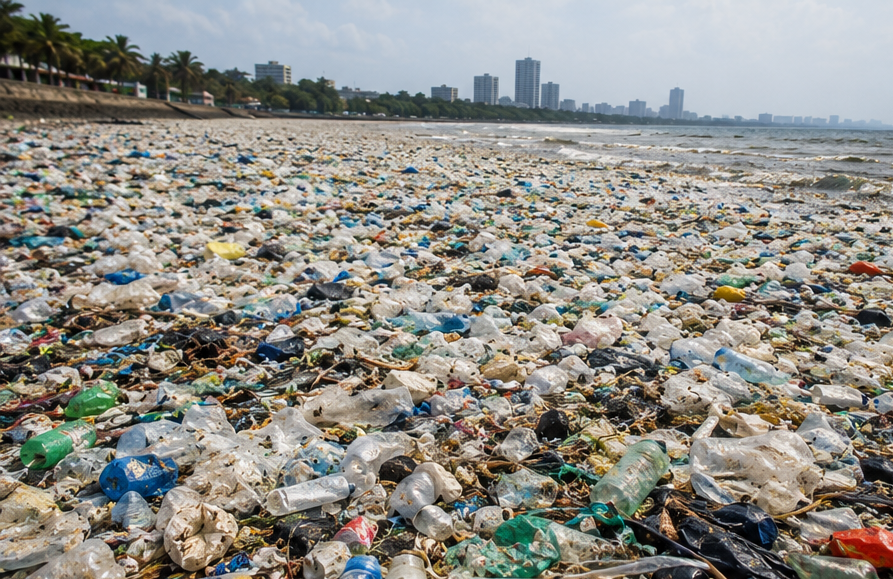
Every day, millions of people throw away plastic containers, cups, wrappers, and packaging without thinking twice about where they end up.
The problem is that plastic never really “goes away.”
What starts as a convenient takeaway box or shipping package can remain on Earth for centuries — polluting oceans, harming wildlife, and filling landfills long after we’re gone.
These are the facts that pushed us to rethink packaging completely and inspired the creation of MycoBox.
1. Over 400 Million Tons of Plastic Are Produced Every Year
The world produces more than 400 million tons of plastic annually, and a huge portion of it is designed to be used once and thrown away.
Single-use plastics include:
- Food containers
- Plastic bags
- Coffee cups
- Packaging foam
- Disposable cutlery
Most of these items are used for only a few minutes but remain in the environment for hundreds of years.
And production keeps increasing every year.
2. A Plastic Bottle Can Take 450 Years to Decompose
One of the most shocking realities about plastic is how long it survives.
Different plastics break down at different speeds, but many common items can remain for centuries:
- Plastic bottle: around 450 years
- Plastic straw: up to 200 years
- Styrofoam: potentially never fully decomposes
Even worse, plastic doesn’t truly disappear. It breaks into smaller and smaller pieces called microplastics, which continue polluting soil and water.
That means every plastic container ever created may still exist in some form today.
3. More Than 11 Million Tons of Plastic Enter the Ocean Every Year
Every year, enormous amounts of plastic waste flow into rivers and oceans.
The result:
- Marine animals ingest plastic accidentally
- Sea turtles mistake bags for jellyfish
- Birds feed plastic fragments to their babies
- Entire ecosystems become contaminated
Microplastics have now been found in:
- Fish
- Drinking water
- Sea salt
- Human blood
- Even rainwater
Plastic pollution is no longer just an environmental issue — it’s becoming a human health issue too.
4. Less Than 10% of Plastic Is Actually Recycled
Many people assume recycling solves the problem.
Unfortunately, most plastic is never recycled at all.
Globally, less than 10% of plastic waste is successfully recycled. The rest ends up:
- In landfills
- Burned in incinerators
- Dumped illegally
- Lost in nature and waterways
Some plastics are too contaminated or too difficult to process economically. Others can only be recycled once before becoming unusable.
In other words, recycling alone cannot fix the plastic crisis.
5. Packaging Makes Up a Huge Percentage of Plastic Waste
Packaging is one of the largest sources of plastic pollution worldwide because it is intentionally disposable.
A food container might exist for:
- 20 minutes during a meal
- 2 minutes during delivery
- Seconds before being thrown away
Yet the environmental impact can last for centuries.
That contradiction forced us to ask a simple question:
Why are we creating permanent waste for temporary convenience?
Why We Created MycoBox
MycoBox started with the belief that packaging should behave like nature.
Instead of producing materials that pollute ecosystems for generations, we wanted to create packaging that could safely return to the earth after use.
That’s why MycoBox focuses on mycelium-based packaging — a natural material grown from mushroom roots and agricultural waste.
Unlike plastic:
- It’s biodegradable
- It’s compostable
- It doesn’t release toxic microplastics
- It can be grown with minimal waste and energy
Nature already created the perfect recycling system. We simply decided to work with it instead of against it.
The Future of Packaging Has to Change
Plastic changed the modern world, but its environmental cost is becoming impossible to ignore.
The future belongs to materials that are:
- Renewable
- Circular
- Compostable
- Low-impact
At MycoBox, we believe packaging should disappear back into nature — not outlive the product it carried.
Because the best waste is the waste that never existed in the first place.