
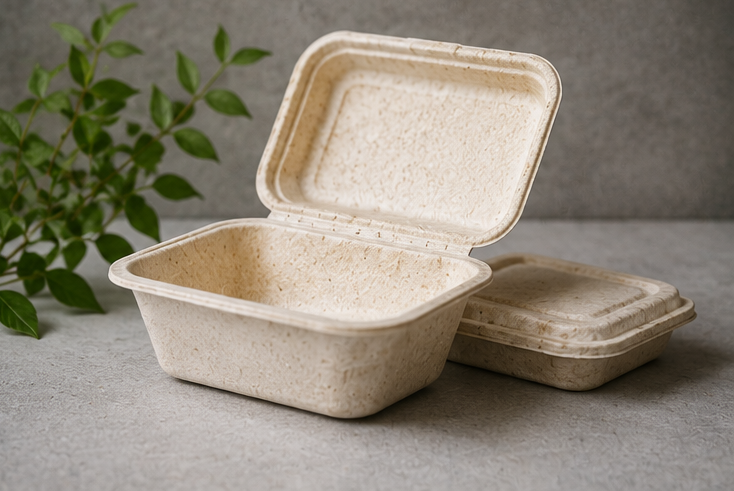
Plastic packaging is everywhere — protecting food, shipping products, and wrapping everyday items. But there’s one major problem: most plastic never truly disappears. Millions of tons end up in landfills, oceans, and ecosystems every year, where they can remain for hundreds of years.
As the world searches for sustainable alternatives, one unexpected material is gaining global attention: mycelium.
This natural, biodegradable material is changing the future of packaging by offering a solution that works with nature instead of against it.
What Exactly Is Mycelium
Mycelium is the root-like network of fungi. While mushrooms are the visible part that grows above ground, mycelium lives underneath the surface, spreading through soil, wood, and organic matter.
It consists of tiny thread-like structures called hyphae, which grow and connect into a dense natural network. In nature, mycelium acts as a decomposer — breaking down dead plants and recycling nutrients back into ecosystems.
Think of it as nature’s underground internet.
How Does Mycelium Packaging Work?
Scientists and sustainable packaging companies discovered that mycelium can be “grown” into specific shapes and forms.
The process is surprisingly natural:
- Agricultural waste like hemp, sawdust, or corn husks is collected.
- Mycelium is added to the material.
- The fungus grows around the organic fibers, binding everything together naturally.
- After several days, the material becomes solid and durable.
- Heat is applied to stop the growth process and dry the final product.
The result is a lightweight, strong, compostable material that can replace foam, plastic, and synthetic packaging.
Unlike traditional manufacturing, this process requires very little energy and creates minimal waste.
Why Is Mycelium Better Than Plastic?
It’s Completely Biodegradable
Traditional plastic can take hundreds of years to break down. Mycelium packaging can naturally decompose in weeks or months under composting conditions.
Instead of polluting the environment, it returns safely back to the earth.
2. It Uses Agricultural Waste
Mycelium products are often made using discarded natural materials such as:
- Corn stalks
- Hemp fibers
- Sawdust
- Rice husks
This transforms waste into something useful instead of sending it to landfills.
3. It Requires Less Energy
Plastic production depends heavily on fossil fuels and industrial processing. Mycelium grows naturally with moisture, oxygen, and organic matter, reducing manufacturing emissions significantly.
4. It’s Surprisingly Strong
Even though it is lightweight, mycelium packaging provides excellent shock absorption and insulation. That makes it ideal for:
- Electronics packaging
- Food containers
- Protective shipping materials
- Furniture components
5. It Doesn’t Leave Toxic Waste Behind
Many plastics release microplastics and harmful chemicals over time. Mycelium is natural and non-toxic, making it safer for both humans and ecosystems.
Companies Already Using Mycelium Packaging
Several innovative companies are already investing in fungal materials and biodegradable design.
Some are creating:
- Protective packaging for electronics
- Compostable food containers
- Leather alternatives made from fungi
- Insulation panels for buildings
Major brands and startups alike are exploring mycelium because consumers increasingly want sustainable packaging solutions.
Final Thoughts
Mycelium packaging proves that some of the best technological solutions already exist in nature.
By using the natural growth systems of fungi, scientists and innovators are creating packaging that is biodegradable, efficient, and environmentally responsible. While plastic dominated the last century, materials like mycelium may define the next one.
What once looked like science fiction is already becoming reality — one mushroom root at a time.